
Keywords
electrospinning
hyaluronic acid
low-temperature plasma
macrophages.
nonwoven fibrous materials
polylactic acid
surface
properties
Abstract
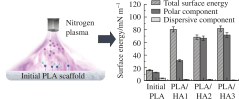
The effect of two-stage surface modification of polylactic acid (PLA)-based scaffolds, including treatment with a low-temperature nitrogen plasma arc discharge and subsequent immobilization of biologically active molecules of hyaluronic acid, on their physicochemical and biological properties was investigated. It was found that the modification changes the chemical composition of the PLA surface, which contributes to an increase in surface energy and a decrease in the water contact angle. Modification of the PLA surface not only does not lead to the appearance of cytotoxic properties, but, on the contrary, helps to maintain the viability of immune cells on its surface.
Funders
Foundation for Scientific and Technological Development of Yugra
2024-536-05